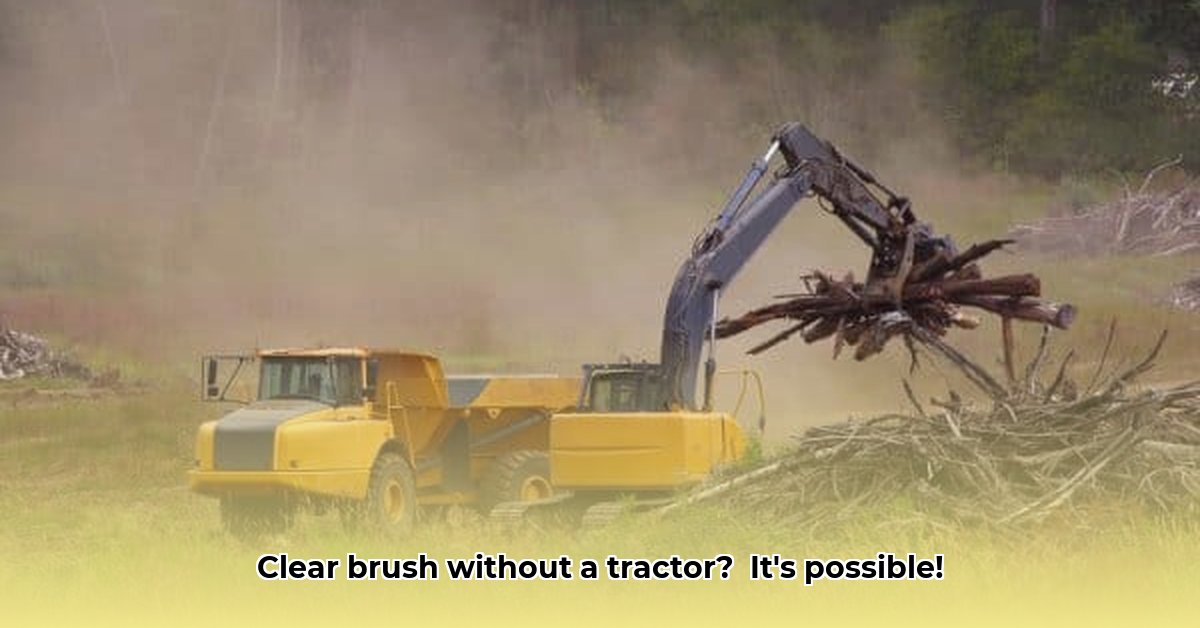
Tackling a brush-clearing project without heavy machinery might seem daunting, but it's achievable with the right approach. This guide offers sustainable, budget-friendly methods for reclaiming your land, perfect for homesteaders, small-scale farmers, and DIY enthusiasts. We'll cover planning, tool selection, safe execution, and post-clearing land management. For larger projects, consider tractor attachments.
1. Planning and Preparation: Laying the Groundwork
Before you start, thorough planning is crucial for efficiency and safety. Begin by assessing your land:
Area Size and Terrain: How large is the area? Is the terrain flat, hilly, or rocky? This impacts tool selection and project timeline. A larger, sloped area will require more time and potentially different techniques than a smaller, flat area.
Vegetation Type: Identify the types of plants you're dealing with. Are they small shrubs, saplings, or larger trees? This influences the most appropriate clearing method. Dense thickets will present a greater challenge than scattered bushes.
Local Regulations: Check local ordinances regarding brush clearing, controlled burns, and herbicide use. Permits might be required, and restrictions may apply. Failing to obtain necessary permits can lead to significant fines.
Safety Equipment and Tools: Gather necessary tools (axes, loppers, saws, etc.), and personal protective equipment (PPE), including sturdy gloves, eye protection, and closed-toe shoes. The right tools ensure efficiency and safety. For controlled burns, ensure you have a fire extinguisher and access to water readily available.
| Risk Factor | Likelihood | Severity | Mitigation |
|---|---|---|---|
| Hand Tool Injuries | Moderate | Low | Wear appropriate PPE (gloves, eye protection), use tools correctly, take breaks frequently. |
| Uncontrolled Fire | High | Very High | Obtain necessary permits, strictly follow fire safety guidelines, have water & extinguisher ready. |
| Chemical Exposure | Moderate | Moderate | Choose biodegradable options, follow instructions meticulously, wear appropriate protective gear. |
| Physical Strain | High | Low | Plan manageable work sessions, taking frequent breaks to avoid exhaustion, stay hydrated. |
2. Choosing the Right Method: Tailoring Your Approach
Several methods exist for brush clearing without a tractor, each with pros and cons:
Hand Clearing: Ideal for small areas with manageable vegetation, this eco-friendly method uses manual tools like axes, loppers, and saws.
- Pros: Inexpensive, environmentally friendly, good exercise.
- Cons: Labor-intensive and time-consuming.
Controlled Burning (with Permits!): Efficient for larger areas with dry brush, but requires careful planning, permits, and adherence to strict safety guidelines. This is not recommended for beginners.
- Pros: Fast and effective, improves soil fertility (in some cases).
- Cons: Significant fire risk, requires permits, air quality concerns, not suitable for all vegetation.
Chemical Methods (Use with Extreme Caution): Herbicides can be effective, but they must be used responsibly and in accordance with local regulations. Choose biodegradable options whenever possible.
- Pros: Can quickly clear large areas.
- Cons: Potential environmental impact, harmful to non-target plants and wildlife, requires proper disposal.
3. Step-by-Step Hand Clearing: A Practical Guide
- Prepare the Area: Clear a safe working zone, removing debris and obstacles.
- Start Small: Begin with loppers to cut smaller stems and branches.
- Larger Branches: Use saws for larger branches and saplings, ensuring a firm grip and proper stance.
- Chop and Dispose: Chop larger pieces into smaller, manageable sizes for easier disposal (composting or responsible burning with permits).
4. Safety Precautions: Prioritizing Your Well-being
- Personal Protective Equipment (PPE): Always wear appropriate PPE (gloves, eye protection, sturdy boots).
- Controlled Burning Safety: If burning, have water, a shovel, and a fire extinguisher readily available. Never leave a fire unattended.
- Tool Safety: Use tools correctly and take regular breaks to prevent injury.
- Chemical Safety: If using herbicides, follow the instructions precisely. Wear protective clothing and dispose of chemicals safely, according to local regulations.
5. Post-Clearing Management: Sustainable Land Stewardship
Once cleared, protect your soil to prevent erosion. Consider mulching, planting cover crops, or other erosion control techniques. A soil test can help determine nutrient needs and promote healthy soil.
6. Troubleshooting: Addressing Common Challenges
Encounter stubborn roots? A digging bar or mattock may be necessary. Adjust your strategy for challenging terrain. Remember patience and safe practices are essential.
7. Resources and Further Reading
Consult your local agricultural extension office or conservation district for guidance on sustainable land management practices and regulatory information. They are invaluable resources for best practices within your region.
Key Takeaways:
- Sustainable land clearing often involves careful planning and consideration of multiple factors.
- Several methods exist for brush clearing, each with its own risks and benefits.
- Safety is paramount; always prioritize your well-being and follow safety guidelines.
- Post-clearing land management is essential for long-term soil health and erosion control.